

Quick Answer
A dependable school uniform program combines a clear policy with an approved product assortment, consistent colors and logos, broad sizing, family fitting access, affordability planning, reliable inventory and a defined process for exceptions and product changes. Principals and heads of school should own the educational and cultural purpose of the policy, while business managers and uniform partners translate that purpose into products, timelines, communication and service.
Key Takeaways
- Separate policy decisions from product and vendor decisions, then make sure they support one another.
- Create an approved assortment that is broad enough for student needs but limited enough to remain understandable.
- Plan inventory, fitting, embroidery, new-student orders and exchanges well before back-to-school season.
- Use family questions, exchanges, compliance issues and unavailable items to improve the program annually.
Why school uniform programs require operational planning
A uniform policy may occupy only a page in a handbook, but implementation touches admissions, finance, communications, student life, front-office staff, teachers, families and vendors. Without clear ownership, small product questions can become administrative distractions during the busiest weeks of the school year.
All Uniform Wear supports school communities with approved assortments, logo embroidery, retail fitting, family shopping assistance, campus events and repeat ordering. School leaders receive the greatest value when the uniform provider is integrated into the planning calendar rather than contacted only when problems arise.
What standards should a school uniform program define?
Document the required garments by grade, gender-neutral options, approved colors, logo placement, outerwear, PE uniforms, spirit wear, footwear, accessories, seasonal variations and staff apparel where applicable. Also identify financial assistance, used-uniform options, accommodations and exception approval.
Create a controlled uniform matrix
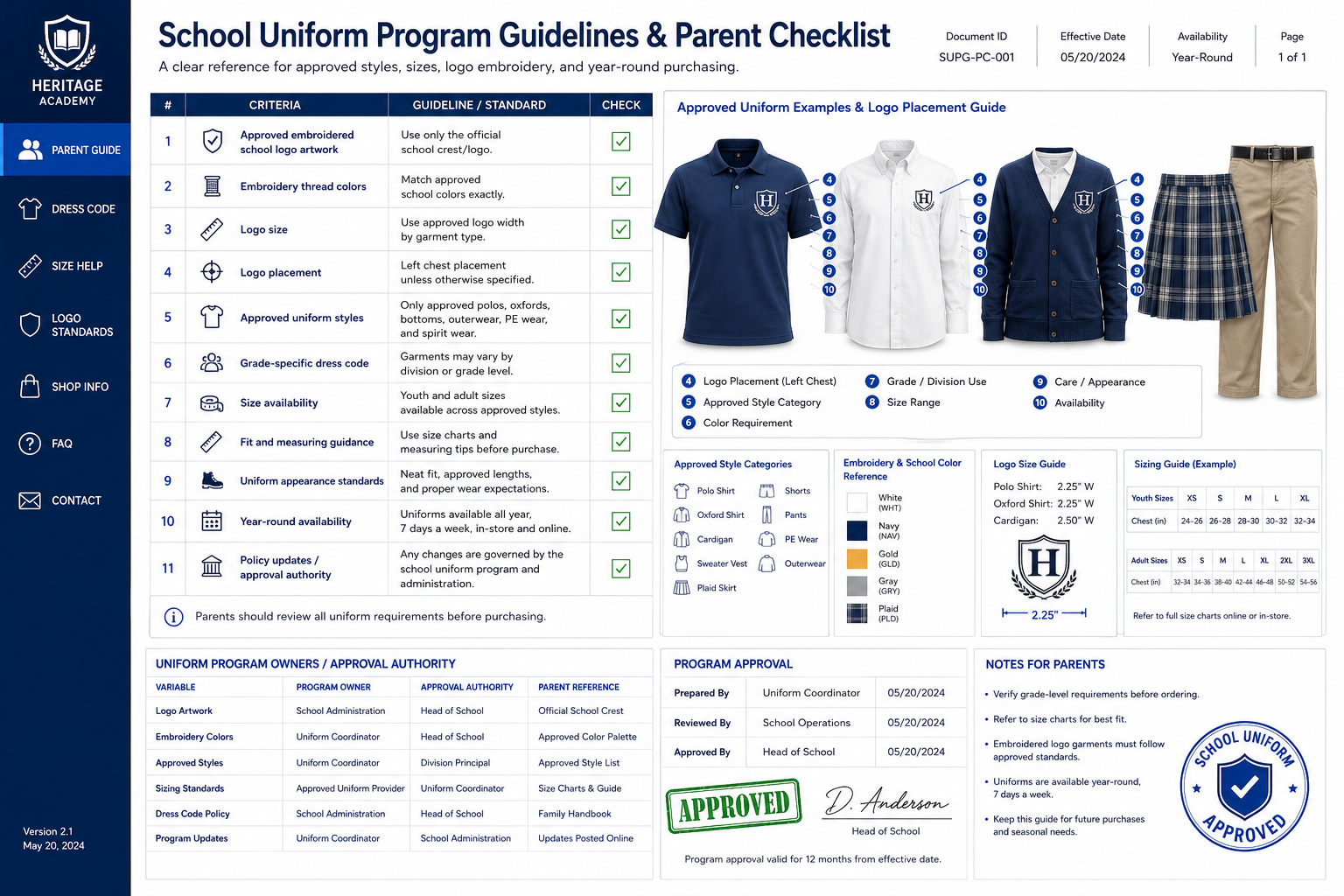
A uniform matrix is a single reference showing each grade or group, every approved garment, the exact color, logo treatment and whether the item is required or optional. It helps align the handbook, website, vendor system and staff enforcement.
- Core daily uniform: Required tops, bottoms, logo rules and layering pieces.
- Special-use apparel: PE, athletics, field trips, formal days, graduation or spirit wear.
- Program governance: Who approves changes, substitutions, embroidery proofs and policy exceptions.
How should schools prepare families for uniform season?
Publish requirements early, use exact product language, explain where and how to shop, provide sizing guidance and identify deadlines for embroidered or special-order items. New families need the same information through admissions and onboarding rather than discovering it after enrollment.
Decision Guide
| Area | Recommended approach | Why it matters |
|---|---|---|
| Family communication | Policy, approved products, photos, shopping instructions and deadlines | Reduces uncertainty and incorrect purchases |
| Fitting access | Store fitting, campus event, size charts and exchange instructions | Supports different body types and new families |
| Affordability support | Assistance, used-uniform process and reasonable essential quantities | Improves access and reduces stigma |
| Seasonal readiness | Forecasting, early orders, substitution rules and escalation contacts | Protects the opening of school |
How to manage the program throughout the year
- Assign ownership: Identify the school decision-maker, operational contact and uniform-provider contact.
- Approve the assortment and proofs: Confirm physical samples, colors, sizing, logos, placements and pricing.
- Launch a communication calendar: Coordinate returning-family reminders, new-family onboarding and back-to-school deadlines.
- Review performance: Evaluate availability, exchanges, complaints, policy questions, accommodations and discontinued products.
Sources and Additional Information
Common Questions
Frequently Asked Questions About School Uniform Program Guide for Principals, Heads of School and Business Managers
When should a school begin planning for the next uniform season?
Major policy or product changes should be addressed well before summer so samples, approvals, inventory and family communication can be completed.
How many uniform options should a school approve?
Enough to support climate, fit, age and student needs, but not so many that the program becomes confusing or difficult to stock and enforce.
What should happen when an approved item is unavailable?
Use a preapproved substitution process that protects color, logo and policy consistency, and communicate the temporary option clearly to families and staff.
The best uniform programs are planned before families begin shopping
School leaders can reduce avoidable frustration by treating uniforms as a year-round operating program. Clear governance, controlled products, accessible fitting, early communication and dependable service allow the uniform policy to support the school community rather than consume administrative attention.
