
Quick Answer
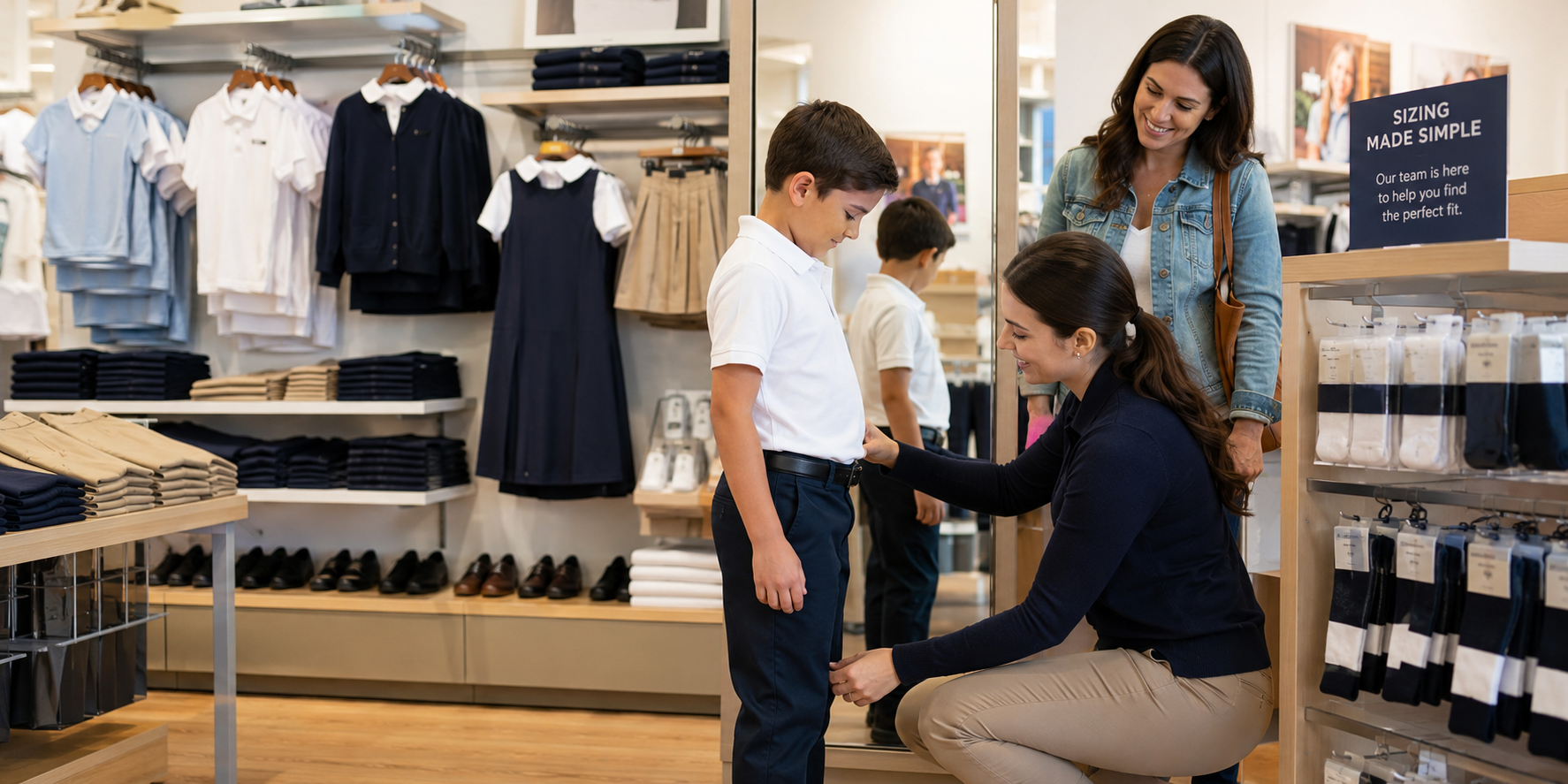
Start with current body measurements, then compare them with the size chart for the exact brand and garment. Have the student try on complete outfits and check sitting, reaching, walking, bending and waistband comfort. Allow reasonable growing room, but avoid buying so large that sleeves, hems, waistbands or loose fabric interfere with movement or create an untidy appearance. Because sizing varies by manufacturer, the labeled size should be treated as a starting point rather than a universal standard.
Key Takeaways
- Measure the student close to the shopping date instead of relying on last year's size.
- Use the size chart for the exact brand, style and garment—not a general age-based estimate.
- Fit tops, bottoms, belts, layers and shoes together to identify coverage or length problems.
- Plan for realistic growth while preserving comfort, safety and compliance on the first day of school.
Why school uniform sizing deserves a careful fitting
A school uniform may be worn for many hours, several days each week. Proper fit supports comfort in the classroom, movement during transitions and recess, a neat appearance and easier compliance with school rules. A rushed size choice can lead to tight waistbands, dragging hems, exposed undershirts or garments that a student avoids wearing.
All Uniform Wear has served generations of school families since 1983. In-store fitting and school-specific assortments help parents compare approved garments while accounting for differences between brands, cuts and student body types.
How should parents measure a child for school uniforms?
Use a flexible tape measure over lightweight clothing and keep the tape level without pulling it tight. Record the chest, natural waist, hip, inseam and height. For shirts, also consider shoulder width and sleeve length. For skirts or jumpers, confirm the school's required finished length.
Measure the student, then verify the garment
Body measurements help identify a likely size, but the final decision should be based on how the actual garment fits. Different manufacturers may use different proportions even when the size label is the same.
- Chest: Measure around the fullest part while the student stands naturally.
- Waist and hip: Measure the natural waist and fullest part of the hip without compressing clothing.
- Inseam and height: Measure from the crotch to the desired pant length and confirm overall height for proportion.
How should each school uniform garment fit?
The student should be able to sit, reach, bend and walk comfortably while the garment maintains appropriate coverage. Check the entire outfit together because shirts, belts, waistbands, skirts, pants and outerwear affect one another.

Decision Guide
| Area | Recommended approach | Why it matters |
|---|---|---|
| Polo or blouse | Shoulders align reasonably; buttons do not pull; hem stays tucked when required | Avoid excessive width or sleeves that interfere with movement |
| Pants or shorts | Waist stays secure; rise and seat allow sitting; hem clears the floor | Adjustable waists can help, but should not create heavy bunching |
| Skirt, skort or jumper | Waist is comfortable and finished length meets school policy | Confirm length while standing, sitting and bending |
| Sweater or jacket | Fits over the approved shirt without restricting shoulders | Allow room for layering without oversized sleeves |
How to plan for growth without buying uniforms too large
- Start with today's fit: Choose a garment that is wearable and compliant now, not one intended only for several months later.
- Use built-in adjustability: Consider adjustable waistbands, modest hem allowances and layering pieces where approved.
- Prioritize high-wear essentials: Buy enough correctly fitting daily pieces, then add replacements as the student grows.
- Recheck before removing tags: Have the student try on complete outfits again at home and confirm school-specific requirements.
Sources and Additional Information
Common Questions
Frequently Asked Questions About School Uniform Sizing Guide for Parents
Should parents buy school uniforms one size larger for growth?
Sometimes a slightly larger size is appropriate, but a full size increase may create poor fit. Compare the actual measurements, garment cut and available adjustability.
How many uniforms should a child try on?
Try at least one complete approved outfit and compare alternate cuts or sizes when the fit is uncertain. Tops and bottoms should be evaluated together.
When is the best time to shop for school uniforms?
Shop early enough to allow fitting, exchanges, embroidery and back-to-school demand, but close enough to the school year that measurements remain useful.
Choose a uniform that fits now and adapts sensibly
The best school uniform size supports comfort, movement, coverage and policy compliance from the first day. Measure carefully, use the exact product size chart, test the full outfit and rely on adjustable features rather than excessive oversizing.
