

Quick Answer
Care for school uniforms by following the label on each garment, sorting compatible colors and fabrics, treating stains promptly with an approved method, avoiding unnecessary heat and rotating enough pieces to prevent constant emergency washing. Close zippers and fasteners, empty pockets and inspect garments before laundering. Because polos, pants, skirts, sweaters and performance garments may have different instructions, do not assume the entire uniform can be washed and dried in exactly the same way.
Key Takeaways
- Read the sewn-in care label before the first wash and again when adding a new garment.
- Separate incompatible colors and fabrics, especially during the first few washes.
- Treat stains early without using a product or temperature prohibited by the label.
- Rotate garments and repair small problems before they become unwearable.
Why school uniform care affects comfort, cost and compliance
School uniforms face repeated wear, playground activity, meals, art projects, transportation and frequent laundering. A consistent care routine can help preserve appearance and reduce the likelihood that a garment becomes too faded, misshapen or damaged to meet school expectations.
Parents also benefit from planning a workable rotation. Enough approved pieces, clearly labeled ownership and a simple inspection routine can reduce rushed laundry and last-minute replacement shopping.
What does the school uniform care label tell parents?
The care label gives the manufacturer's recommended washing, bleaching, drying and ironing instructions. Fiber content can help explain how a garment may behave, but the labeled care method should guide routine cleaning.
Check every garment category separately
A polo, pleated skirt, sweater, performance shirt and embroidered outerwear piece may each require different care. Save a photo of the label when the printed information may fade or when several children wear similar garments.
- Washing temperature: Use the stated temperature and cycle rather than assuming hotter is better.
- Bleach instructions: Use only the type permitted by the label; some garments prohibit chlorine bleach.
- Drying and ironing: Excessive heat may affect shrinkage, elastic, pleats, finishes, logos or color.
How can parents prevent fading, shrinkage and premature wear?
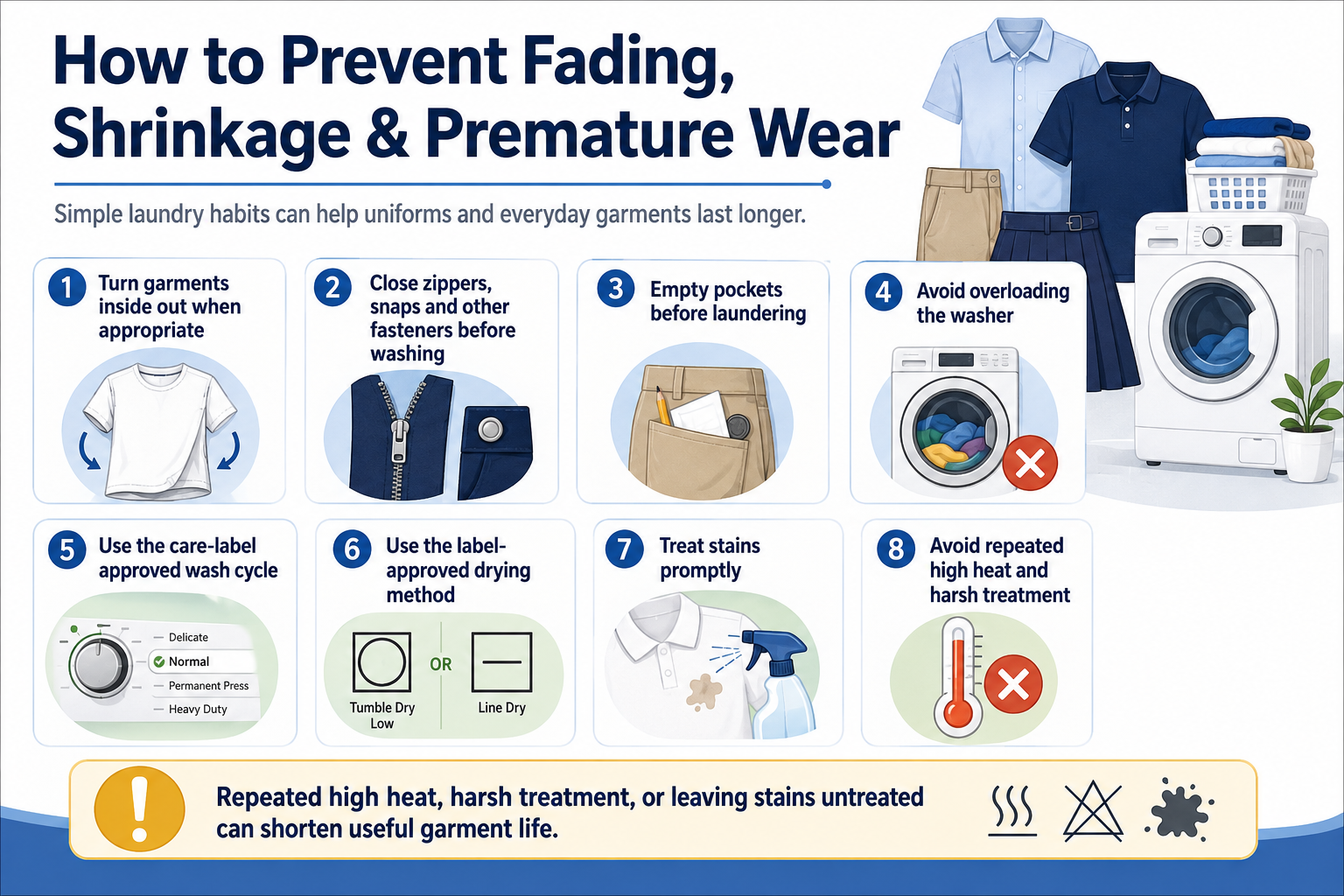
Turn garments inside out when appropriate, close fasteners, empty pockets and avoid overloading the washer. Use the label-approved cycle and drying method. Repeated high heat, harsh treatment or leaving stains untreated can shorten useful garment life.
Decision Guide
| Area | Recommended approach | Why it matters |
|---|---|---|
| Polos and knit shirts | Check collar shape, logo area and color before drying | Avoid unapproved high heat that may affect fit |
| Pants and shorts | Empty pockets and secure closures | Inspect knees, hems, seat and adjustable-waist elastic |
| Skirts, skorts and jumpers | Preserve pleats and check fastening instructions | Hang or fold promptly to reduce deep wrinkles |
| Sweaters and outerwear | Follow shape and drying instructions carefully | Avoid stretching wet knits or damaging embroidered areas |
A practical weekly school uniform care routine
- Inspect after wear: Check pockets, stains, loose buttons, open seams, knees, hems and name labels.
- Sort by care needs: Separate incompatible colors, temperatures and drying methods.
- Launder according to the label: Treat stains using an approved product and avoid improvising with excessive heat or bleach.
- Prepare for the next week: Match complete outfits, make small repairs and identify pieces approaching replacement.
Sources and Additional Information
Common Questions
Frequently Asked Questions About How to Care for School Uniforms and Keep Them Looking Their Best
Should school uniforms be washed before the first wear?
Follow the manufacturer's recommendations. Many parents wash new garments before use, but doing so may affect return eligibility, so confirm the fit and store policy first.
How can parents keep track of uniforms shared across siblings?
Use durable name labels where permitted and store each child's approved pieces together by category and size.
When should a school uniform be replaced?
Replace it when damage, fading, shrinkage, loss of opacity or poor fit prevents comfortable wear or compliance with the school's standard.
Simple care habits protect the uniform investment
The most effective care routine follows the garment label, addresses stains early, controls heat and rotates enough pieces to avoid constant wear. Regular inspection also gives families time to repair or replace uniforms before a busy school morning.
