
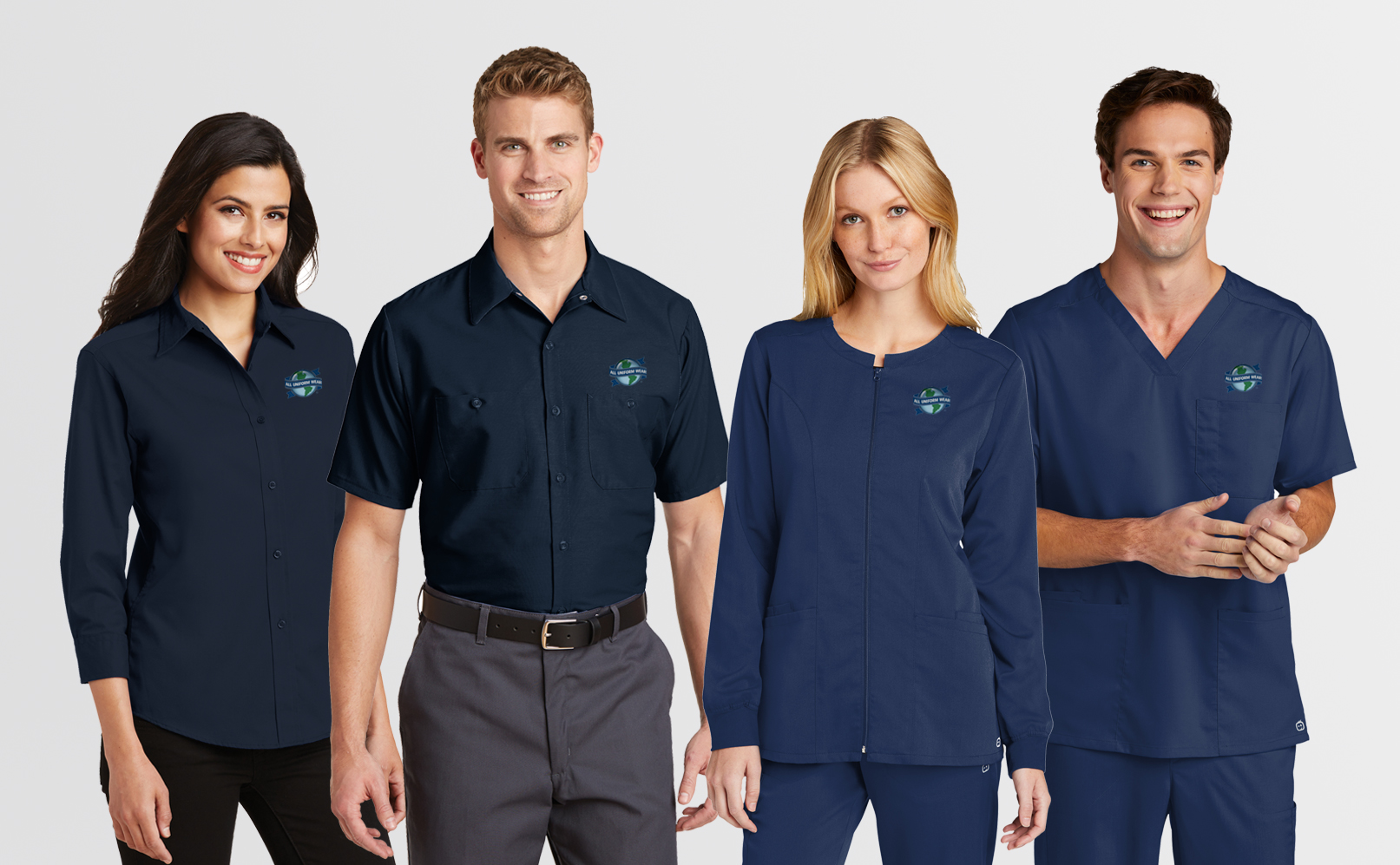
Quick Answer
A branded uniform image should translate the company's visual identity into garments employees can wear comfortably and consistently. Start with the customer experience and work environment, then select a coordinated color palette, garment silhouette and level of formality. Create exact standards for logo artwork, thread colors, size and placement. Finally, approve enough fits and role-specific pieces to serve employees without allowing uncontrolled variations that weaken the brand.
Key Takeaways
- Uniform branding includes color, silhouette, fabric, fit and presentation—not only the logo.
- Choose garments that reflect the brand while meeting the physical and environmental needs of each role.
- Use one approved embroidery proof and written placement standard.
- Coordinate departments and locations through a controlled family of products rather than unrelated apparel.
Why a uniform should look like the company it represents
Customers often see employees before they experience the company's service. Apparel can help identify who is available to assist, distinguish roles and reinforce the same colors, tone and level of professionalism used in the company's signs, website, vehicles and marketing materials.
A strong branded image should still feel practical to employees. If garments are uncomfortable, difficult to care for or inappropriate for the job, the appearance standard will be harder to maintain. AUW helps businesses compare professional apparel and embroidery options while keeping brand consistency and daily wearability connected.
How do you translate a brand into a uniform?
Begin with the qualities the company wants employees to communicate: polished, approachable, technical, premium, energetic, dependable or service-focused. Then select garment categories, colors and silhouettes that support those qualities in the actual workplace.
Use the full visual system
A company may be recognizable through a specific color, but the uniform image is also shaped by collar style, layering, contrast, fabric texture, fit and how the logo is used. Subtle branding can be more effective than simply enlarging the logo.
- Brand palette: Identify primary, secondary and neutral garment colors that reproduce consistently.
- Silhouette and formality: Choose polos, woven shirts, jackets, dresses, aprons or workwear based on customer expectations and job duties.
- Role visibility: Use coordinated variations when customers need to distinguish managers, technicians, service staff or departments.
What should a company logo embroidery standard include?
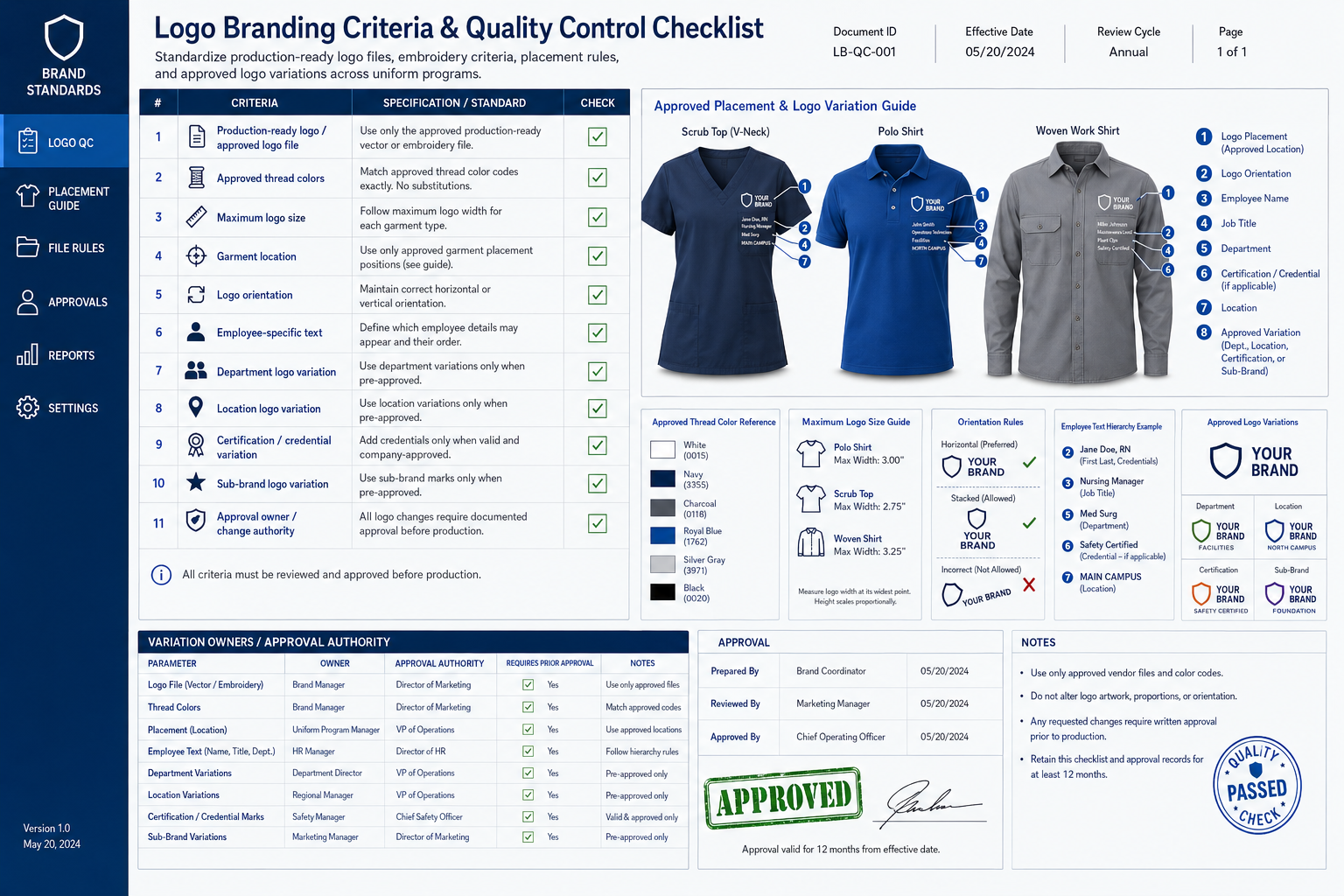
The standard should identify the production-ready logo file, approved thread colors, maximum size, garment location, orientation and any employee-specific text. It should also define when the logo changes for departments, locations, certifications or sub-brands.
Decision Guide
| Area | Recommended approach | Important consideration |
|---|---|---|
| Logo artwork | Use one approved production file and proof | Prevents shape, spacing and lettering changes |
| Thread colors | Record exact approved colors for light and dark garments | Maintains brand consistency across reorders |
| Placement and size | Define location, dimensions and relationship to pockets or seams | Prevents inconsistent or impractical decoration |
| Names, titles and departments | Set capitalization, line order and approval responsibility | Reduces spelling and hierarchy errors |
How to build a coordinated company apparel assortment
- Select the core garment: Choose the primary shirt, top or work garment worn by the largest employee group.
- Add role-specific options: Approve layers, weather apparel and job-function alternatives that remain visually coordinated.
- Fit-test representative employees: Review movement, coverage, sizing, embroidery placement and laundering expectations.
- Document the final system: Publish exact styles, colors, logo rules, employee examples and ordering instructions.
Sources and Additional Information
Common Questions
Frequently Asked Questions About How to Build a Branded Uniform Image for Your Company
Should every employee wear the exact same uniform?
Not necessarily. Different roles may require different garments, but the overall program should use coordinated colors, branding and presentation standards.
How large should a company logo be on a uniform?
Large enough to be recognizable in the intended setting, but proportionate to the garment and location. Approve a physical sample before production.
Can embroidered apparel match printed brand colors exactly?
Thread and fabric are different materials from ink and screens, so exact visual matching may not always be possible. Approve the closest intentional thread standard under normal lighting.
Build a recognizable image without sacrificing wearability
The best branded uniforms connect company identity with employee comfort and job function. A coordinated product family, controlled color palette and repeatable embroidery standard help customers recognize the team while giving procurement and marketing leaders a system they can maintain.
