
Quick Answer
A practical starting point is one clean scrub set for each scheduled shift between laundry days, plus at least one backup set. A nurse working three shifts per week may be comfortable with four to five sets, while a five-shift schedule may call for six or more. The correct number depends on laundry frequency, employer-provided garments, on-call duties, changing requirements, approved colors and how quickly preferred styles can be replaced.
Key Takeaways
- Base the wardrobe on shifts between laundry days, then add a backup for spills, schedule changes or delayed laundry.
- Follow the employer's policy and the garment care label; specialized or contaminated clothing may require different handling.
- Rotate sets instead of repeatedly wearing and washing one favorite outfit.
- Replace garments when fit, opacity, fabric integrity, color or professional appearance deteriorates.
Why a reliable scrub rotation helps nurses and employers
A scrub wardrobe should make the workweek easier. Too few sets can create late-night laundry, repeated wear and no backup when a garment is stained or damaged. Too many uncoordinated purchases can create unnecessary cost and make it difficult to maintain an employer's approved color or appearance.
For healthcare organizations, a defined initial issue and replacement process can also reduce confusion. The goal is not to force every employee into the same quantity, but to establish a reasonable baseline and explain what happens when schedules, sizes, roles or approved products change.
How many scrub sets should a nurse own?
Count the maximum number of shifts normally worked between laundry cycles and add at least one clean backup. Then adjust for on-call work, commuting, employer changing rules, seasonal layering and whether the facility provides or launders specific garments.
A simple scrub-rotation formula
Use: scheduled shifts between laundry days + one backup set = minimum practical rotation. Add another set when laundry access is unpredictable, the role has frequent soil exposure, or the approved product has a longer replacement lead time.
- Three shifts per week: Often four to five sets provide a practical rotation and backup.
- Five shifts per week: Often six or more sets are easier to manage when laundering weekly.
- Variable or on-call schedule: Keep additional approved pieces available for unexpected coverage.
How should nurses wash and handle scrubs?
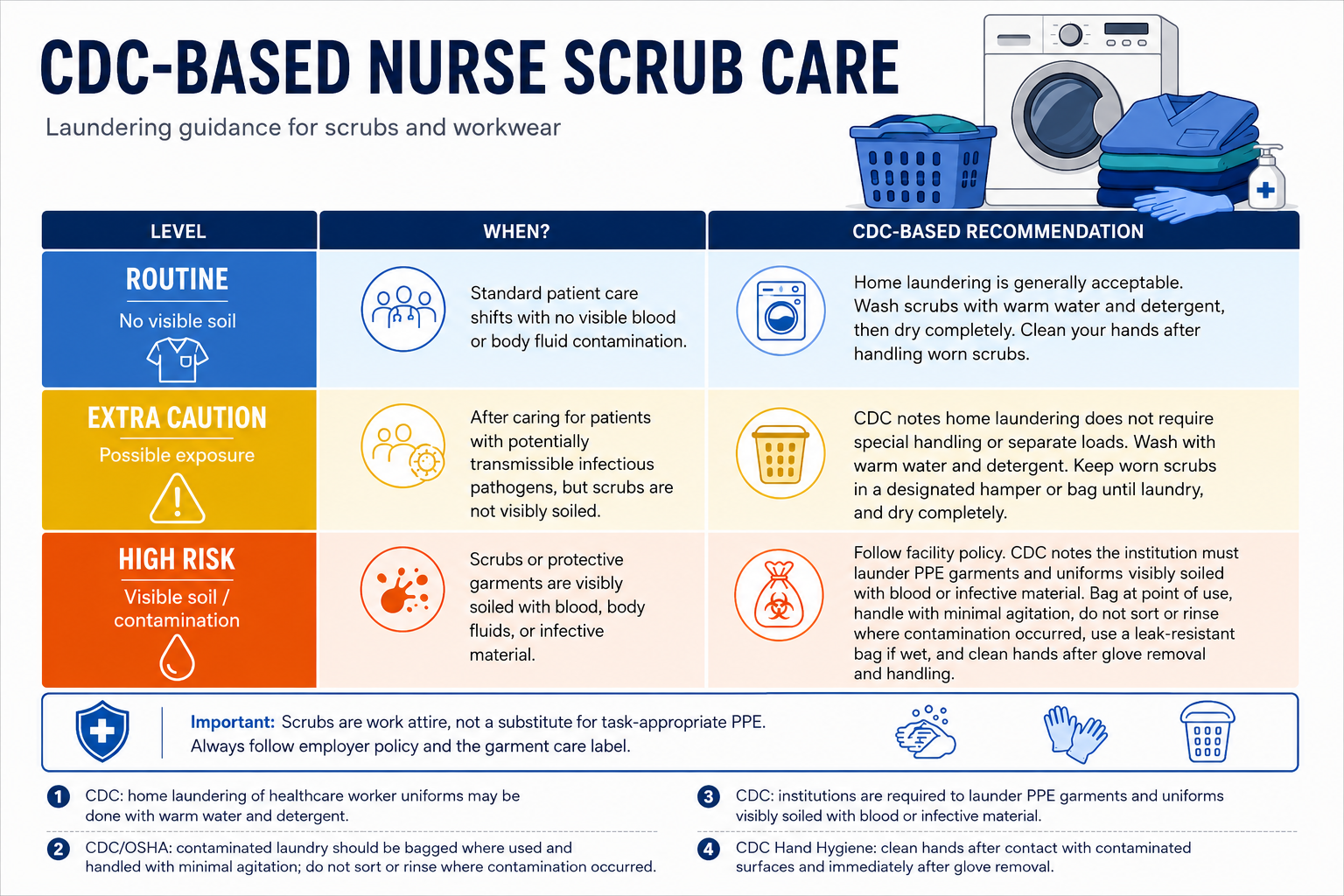
Follow the employer's infection-control policy and the manufacturer's care label. CDC guidance distinguishes routine healthcare textiles from specialized situations and notes that healthcare laundry includes uniforms and scrub suits. OSHA also distinguishes ordinary scrubs from PPE, while requiring employers to manage and launder required PPE and contaminated protective garments under applicable standards.
Decision Comparison
| Option or situation | Best use or action | Important consideration |
|---|---|---|
| Routine personal scrubs | Follow employer policy and garment label | Keep clean garments separate from worn garments |
| Facility-issued surgical attire | Follow facility collection and laundering procedures | Do not substitute home care when the facility requires institutional laundering |
| Garment visibly contaminated with blood or other potentially infectious material | Notify the employer and follow exposure/contaminated-laundry procedures | Do not handle it as ordinary household laundry without direction |
| Required PPE or protective clothing | Employer-controlled cleaning, replacement and disposal rules may apply | Ordinary scrubs are not a substitute for required PPE |
When should scrubs be replaced?
- Inspect fabric: Look for thinning, holes, seam failure, persistent stains or loss of opacity.
- Check fit: Replace garments that have shrunk, stretched out or no longer provide safe, professional coverage.
- Compare color: Retire pieces that have faded enough to conflict with a department's approved shade.
- Review role and policy: Update the wardrobe when the employer changes color, logo, credentials, garment type or laundering requirements.
Sources and Additional Information
- CDC — Laundry and Bedding in Healthcare Facilities
- OSHA — Interpretation on Scrubs, Uniforms and PPE
- OSHA — Bloodborne Pathogens Standard
This resource provides general uniform-planning information. Healthcare organizations and employees should follow their own infection-control, safety, human-resources and professional-practice requirements.
Common Questions
Frequently Asked Questions About Scrub Rotation and Care
Can nurses wear the same scrubs for two shifts?
A clean set should be used according to employer policy and the clinical situation. Rewearing a used set without laundering is generally a poor wardrobe practice and may conflict with workplace rules.
Should scrubs be washed separately from household clothing?
Employer policy and the garment's condition should guide the answer. Ordinary scrubs and contaminated garments are not the same category. When a garment is contaminated or governed by a facility laundering rule, follow the employer's procedure.
How can a medical group control replacement costs?
Standardize a manageable assortment, keep approved style and embroidery records, define replacement eligibility, and use a reorder process that prevents unauthorized substitutions.
Build enough rotation to stay prepared
A useful scrub wardrobe covers the normal schedule, laundry timing and at least one unexpected change. Nurses should rotate garments and replace them before wear affects fit or professional appearance. Employers should clearly separate ordinary uniform care from any facility-controlled laundering or PPE requirements.